Reciprocal Relationships in Reserves: Cultural Ecosystem Services (CES)

Project overview
This project set out to explore and enhance how Cultural Ecosystem Services (CES) are understood and integrated across the National Estuarine Research Reserve System (NERRS). From the outset, it was clear that engagement with CES varied widely across the Reserves—some had already incorporated CES into their work, while others were less familiar with the concept or unsure how it applied to their contexts. To address this spectrum of understanding, the project team began with consultations with staff from nine Reserves. These conversations revealed both a strong interest in CES and a need for practical guidance and shared examples.
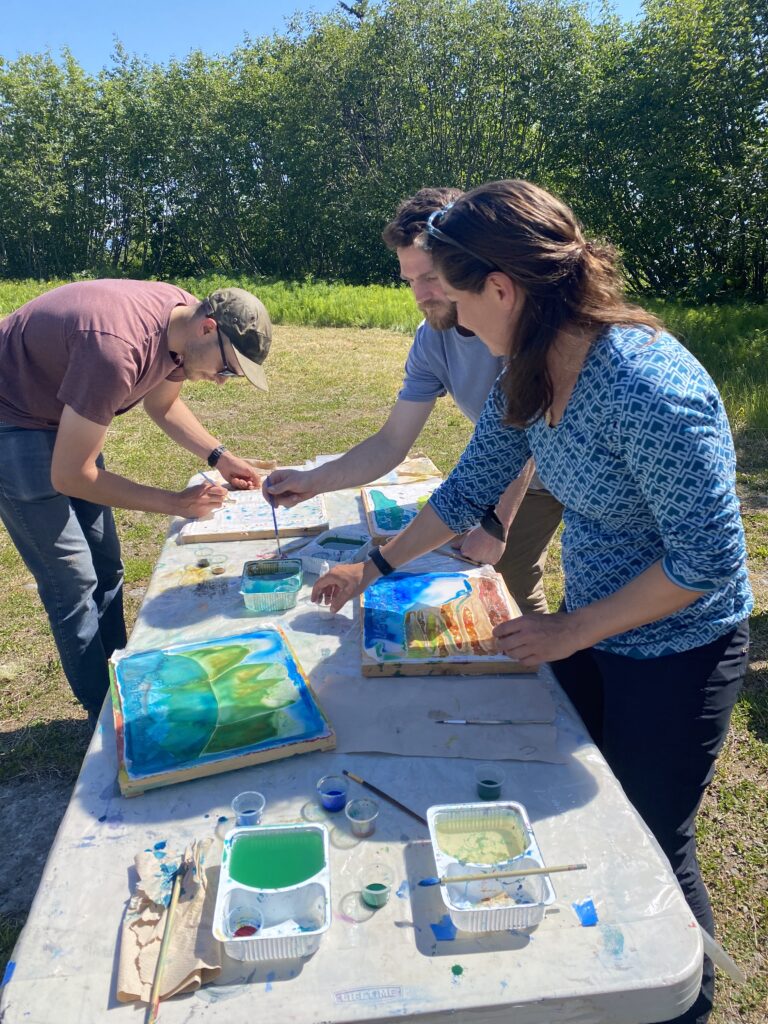
Participants engaging in an art-based method to explore the cultural ecosystem services of Kachemak Bay Reserve Photo credit: Rachel Dacks
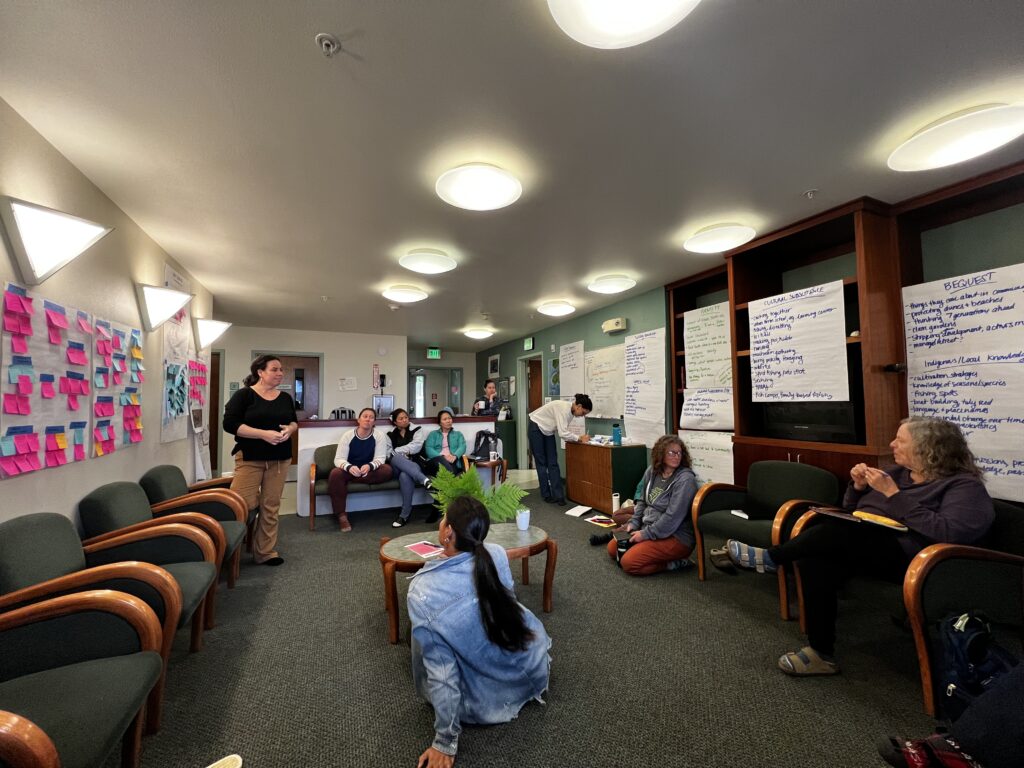
Members of the project team workshopping types of CES during a team retreat at Kachemak Bay NERR.
Research conducted
The project team hosted two well-attended webinars focused on commonly shared activities– celebrations and volunteer engagement—entry points identified during the consultations as promising venues for CES work. These sessions proved successful in attracting a wide audience. Project staff also held a workshop that explored how to integrate CES into existing evaluation practices, using tools like the NOAA Human Dimensions question bank to adapt survey instruments across different sectors.
Findings
This project found that across the System, Reserves are engaging with CES and it was more important to document those activities. Despite the numerous examples that were heard of how Reserves engage with CES (including some listed below), prior to consultations or involvement in this project, these Reserves were not aware that their activities would be considered as “engaging with CES.” Through consulting interviews, Professional Sharing Sessions, and project team activities, this project gleaned many ways that Reserves are engaging with CES:
- Host or participate in celebrations of place, culturally important species, seasons, practices, migration patterns, history, food festivals focused on locally-derived ingredients
- Host activities and events that focus on artistic expression, inspired by the Reserves
- Educational activities
- Lead tours or other activities that facilitate sense of place, connection to place
- Formal research activities focused on identifying and assessing CES
- Providing access to places that people find aesthetically pleasing
- Providing Indigenous communities with access to lands or waters that were previously stewarded by their ancestors
- Historic and cultural signage
- Efforts that crowdsource public responses in regards to why the public loves Reserves (e.g., efforts held as part of I Heart Estuaries Week, or more locally, the “Thank You Delaware Bay Festival”)
Outcomes & impact
A key output of the project is a comprehensive Resource Guide designed to meet users at different stages of familiarity with CES. The guide includes background resources, job aids, and case studies to help Reserve staff better recognize and intentionally engage with CES in their existing work.
Sponsors & supporters