NERRS’s Niche

Project overview
In 2022, the Tijuana River, He’eia, and Padilla Bay National Estuarine Research Reserves (NERRs) were awarded a NERR System (NERRS) Science Collaborative transfer grant to build upon efforts by the NERRS Plastics workgroup to assess the NERRS ‘Niche’ in addressing the impacts of marine debris and coordinate and participate in knowledge transfer toward system-wide strategic planning.
The project’s main objectives were to:
- Facilitate a series of virtual knowledge transfer workshops across NERRs and with the greater Debris Community of Practice (DCoP);
- Develop a draft Strategic Plan to address marine debris issues in estuaries;
- Utilize workshops in order to leverage sector-wide and other efforts such as an estuarine module for aquatic-bound debris monitoring, an education/stewardship toolkit to promote community involvement, and a coastal decision-maker engagement plan that addresses behavior change and policy action.

Microplastics accumulated at the mouth of Heʻeia Stream. Photo credit: Shimi Rii
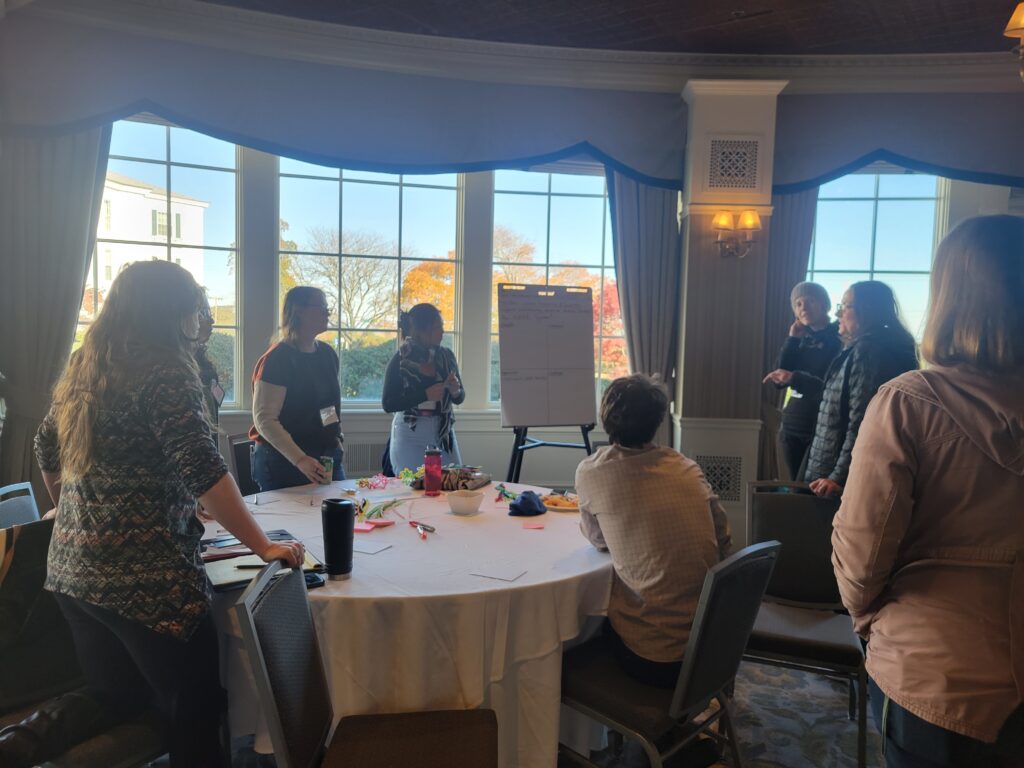
Knowledge transfer workshop #2 at Jacques Cousteau NERR

Some members of the project team during a debris cleanup at He'eia NERR
Research conducted
Estuaries are an important link in the chain of trash becoming marine debris, but the transport and transformation of plastic and other debris through watersheds and in estuaries have been understudied. Plastic and other anthropogenic marine debris alter aquatic ecosystems, contaminating waterways and impacting water quality and habitat resilience. In some cases, marine debris can cause blockages and exacerbate flooding conditions. Across the NERRS, marine debris is an issue of concern for reserves and their surrounding communities. Despite overwhelming interest in growing programs related to marine debris, each reserve is at a different stage of development in addressing the issues.
To address this need, this project facilitated four knowledge transfer workshops designed to promote discussion across reserves and with the greater Debris Community of Practice (DCoP). These workshops further elevated and articulated the NERRS’s niche in addressing marine debris but they also served to inspire and inform a Roadmap for Addressing Marine Debris in the NERRS, which outlines pathways and associated resources for reserve staff and DCoP members to address marine debris at reserves and beyond. Feedback from the workshops directly shaped the Roadmap to develop a national narrative, build relationships and partnerships, and share resources and opportunities.
NSC Project website: Transferring Knowledge to Understand the NERRS’s Niche in Addressing Marine Debris | NERRS Science Collaborative
Findings
The Roadmap serves to guide and support Reserves in promoting understanding, behavior change, and policy action to manage and reduce marine debris in estuaries.
The project explored the NERRS’s niche in marine debris—how the System can uniquely contribute to marine debris remediation efforts and effectively address the issue at national and local levels. Feedback from workshops across Reserves and with the Marine Debris Community of Practice (DCoP) shaped the Roadmap, identifying three main integrative approaches:
- Develop a national narrative for the NERRS.
- Build relationships and partnerships with the DCoP.
- Support each Reserve’s work by sharing resources and opportunities.
Each integrative approach detailed in this Roadmap includes application pathways and case studies that showcase the achievements of various Reserves. The Roadmap is a resource, both for Reserves and DCoP members to address marine debris in individual estuaries and for the NERRS to understand its unique role in the marine debris community, becoming more strategic and effective as a system.
Outcomes & impact
Since project completion in April 2025, the Roadmap has been shared within the NERRS/NERRA (the National Estuarine Research Reserve Association) to better facilitate Reserve relationships with their communities on addressing debris.
Sponsors & supporters