
The ResiDUOS Project

Project overview
The ResiDUOS Project was a 5-pillar approach aimed at improving social-ecological resilience through marine debris prevention and removal in the U.S.-Mexico border region. This was a 2 year project funded through NOAA Marine Debris Program’s Grant through the United States Mexico Canada Agreement. The 5 pillars were:
- Scale up the circular economy for solid waste through reuse and income generation at pilot sites.
- Establish and implement a cross-border Marine Debris Leadership Academy.
- Improve binational flood emergency response and resilience.
- Provide an exemplary model of land-based marine debris capture and characterization.
- Protect and enhance beach, dune, high-marsh, and riverine environments.
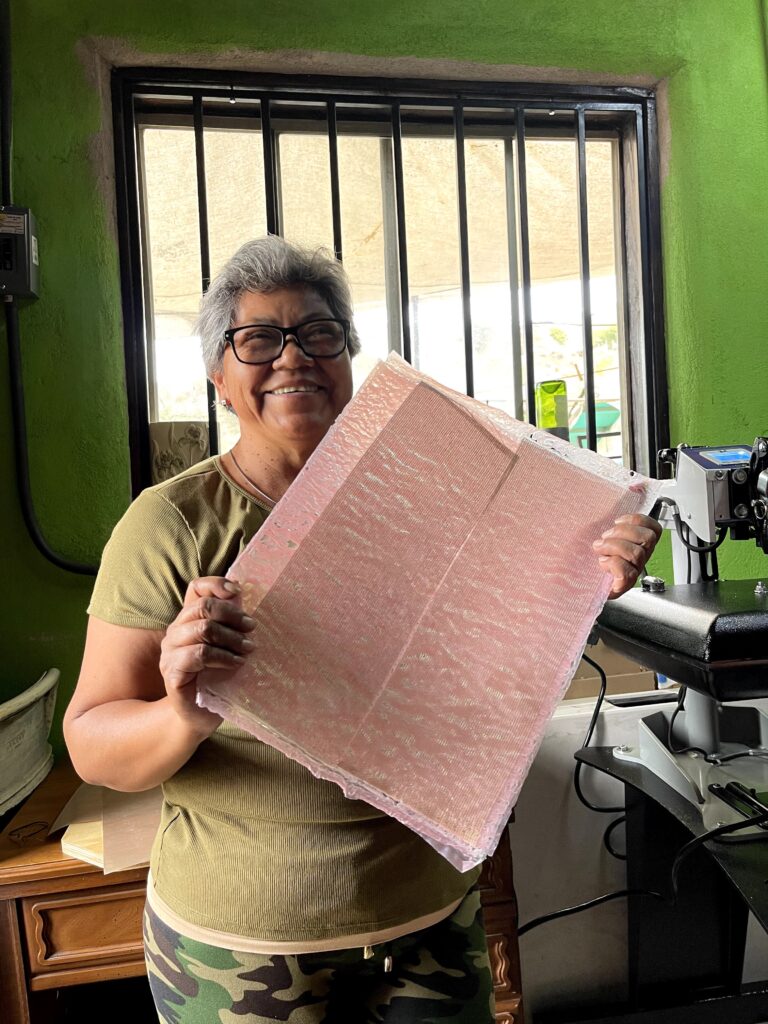
Adela Bonilla's pilot project 'ReCREA' takes solid waste materials and repurposes them into products like pencil cases and notebooks.
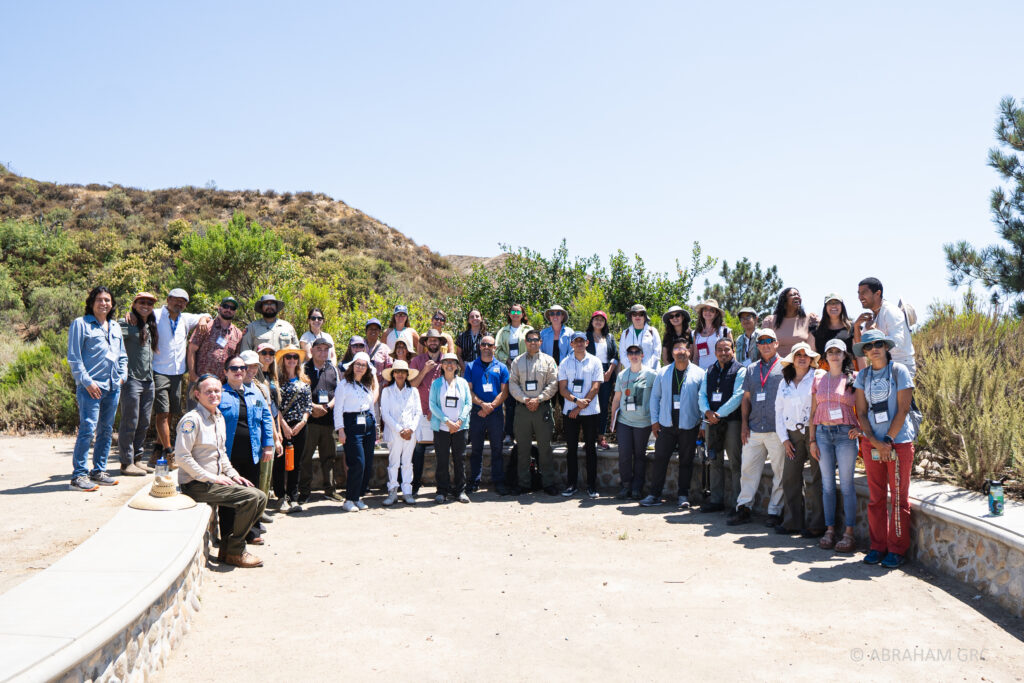
2023 Marine Debris Leadership Academy
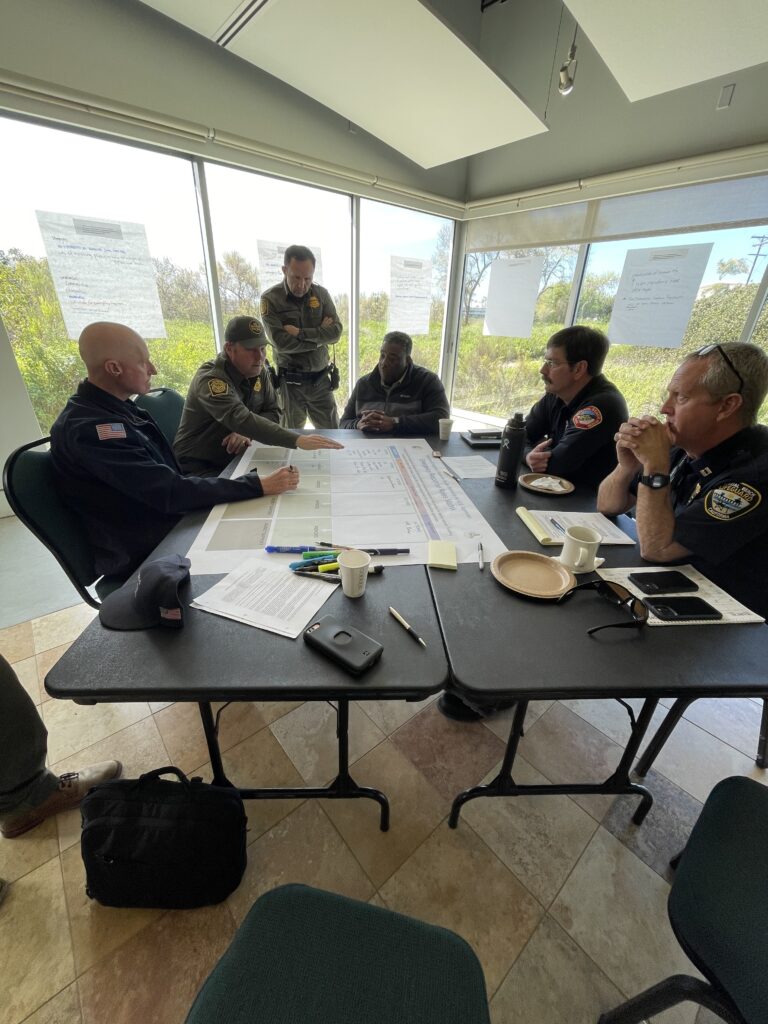
Multiple agencies working to develop the Binational Debris-Related Flooding Response Guide
Research conducted
Rapid urbanization, particularly in areas like Los Laureles Canyon, has resulted in challenges such as inadequate waste management, flooding, and environmental degradation. These issues are exacerbated by irregular infrastructure development and economic disparities. The TRV, located at the watershed’s most northwestern point, bears the brunt of these impacts, receiving large volumes of stormwater and debris, threatening the estuary’s ecosystems, public health, and regional resilience.
This project addressed these challenges by enhancing waste management, reducing marine debris, and improving flood resilience. Leveraging collaborative, community-based research and interventions, the initiative aimed to mitigate the adverse effects of debris and flooding on habitats, biodiversity, and human communities within the TRV. Key actions included prevention strategies, debris removal efforts, and multi-agency collaboration to foster long-term environmental and social benefits for the region.
Social media was also used to document some of the experiences of the 2023 Marine Debris Leadership Academy via the Instagram account @proyecto_residuos.
Findings
Pillar 1: Scale up the circular economy for solid waste through reuse and income generation at pilot sites
This pilot project was highly successful, with its outcomes extending far beyond the initial tasks. It’s success was built on achieving several key objectives. The first step was forming a circular economy workgroup in the Milenio 2000 neighborhood at Los Laureles Sub-basin. Through participatory meetings, the group collaboratively developed a workgroup charter to formalize their mission and operations, fostering ownership and teamwork. The project then focused on waste material collection, separation, and characterization. Community members were trained to manage waste effectively, with plastic bags, Tetrapak, and chip packages identified as the primary materials for upcycling. Exploration of the model’s transferability further demonstrated its adaptability. Site assessments in the Kumiai community of San Antonio Necua and Cañón de Doña Petra revealed opportunities for replication, laying the groundwork for future projects. By the end of the pilot, more than 70% of the collected waste had been transformed into consumer products, significantly contributing to environmental improvement while generating income for the community.
Pillar 2: Establish and implement a cross-border Marine Debris Leadership Academy
The Marine Debris Leadership Academy (MDLA) is an innovative initiative addressing the critical issue of marine and land-based debris within the Tijuana River Watershed. This academy exemplifies the power of cross-border collaboration, uniting leaders from diverse sectors to develop sustainable, community-driven solutions to shared environmental challenges. By equipping participants with advanced knowledge, leadership skills, and practical tools, the MDLA has fostered meaningful cooperation across the U.S.-Mexico border. The eight-week curriculum, delivered through 16 courses, combined theoretical modules with practical applications for nearly 100 leaders from both the U.S. and Mexico, representing local governments, NGOs, academic institutions, and community residents and leaders. This diverse cohort enriched the program by bringing a range of perspectives and expertise to the table, ensuring that solutions were not only interdisciplinary but also tailored to the region’s unique social, environmental, and political contexts.
Pillar 3: Improve binational flood emergency response and resilience.
This pillar focused on addressing the immediate threats posed by solid waste accumulation while advancing key goals to enhance regional resilience and environmental protection. A result was The Binational Debris-Related Flooding Response Guide. The Guide was developed using a participatory approach, incorporating data gathered from interviews, workshops, and site visits. This qualitative process enabled the TRNERR team to tailor the Guide based on the practical challenges shared by stakeholders. A broad array of stakeholders, including government officials, academics, NGOs, and community leaders from both Mexico and the United States, contributed valuable input. While a Guide been finalized, but it remains a living document, continuously evolving as new insights and needs arise. TRNERR recognizes the importance of ensuring the document remains a practical, actionable resource and as such, will continue to work closely with the agencies involved in its creation to validate and refine its content. This ongoing validation process is key to ensuring the Guide stays relevant and accurate, meeting the operational needs of all stakeholders.
Pillar 4: Provide an exemplary model of land-based marine debris capture and characterization.
To achieve this project’s goal, solid waste characterization, quantification, and removal were carried out at the Goat Canyon Sediment Basin (GCSB) complex. This process focused on assessing the types and quantities of solid waste that had accumulated near the trash booms in both the Upper and Lower Basins of the GCSB complex, with support from Engineering/Remediation Resources Group, Inc. (ERRG).
Pillar 5: Protect and enhance beach, dune, high-marsh, and riverine environments.
This project provided significant progress in preserving and restoring the beach, dune, high-marsh, and riverine ecosystems within the Tijuana River Watershed. Through the collaborative efforts of volunteers, local organizations, and government partners, thousands of pounds of debris—including plastics, tires, and hazardous materials—have been removed, mitigating serious threats to these sensitive ecosystems. Beyond the clean-up efforts, the outreach and educational programs tied to Tijuana River Action Month (TRAM) have been instrumental in raising awareness about both marine and land-based debris. These initiatives emphasize the interconnectedness of the binational Tijuana River Watershed, highlighting how local actions—both positive and negative—impact environmental and social systems throughout the region. By promoting a deeper understanding of the need for collective action, these programs have fostered stronger community engagement and support for preserving these vital habitats. The success of TRAM underscores the importance of binational collaboration between U.S. and Mexican organizations, establishing a valuable precedent for addressing shared environmental challenges through cross-border conservation.
Outcomes & impact
This project concluded in January 2025. Since then, several components of this project have continued on to further deepen their impact on addressing debris in the border region.
Upon completing the objectives and tasks under Pillar 1, the Los Laureles community group (led by Adela Bonilla and supported by project partners Waste for Life, A su Futuro, and Universidad Xochicalco) secured additional funding through the San Diego Foundation (SDF) to ensure the initiative’s continuity.
Building on its success, Pillar 2’s Marine Debris Leadership Academy expanded its scope through the proposal Cultivating a Tri-National Marine Debris Leadership Coalition to Find Solutions to Complex Cross-Border Land-Based Marine Debris, jointly submitted by California Sea Grant and TRNERR. This initiative was selected through the National Sea Grant’s Marine Debris Community Action Coalition Competition, another example of the USMCA / MDP resources enabling the program to scale its impact, fostering enhanced collaboration and continued knowledge-sharing by laying a strong foundation for long-term systemic change.
Sponsors & supporters