

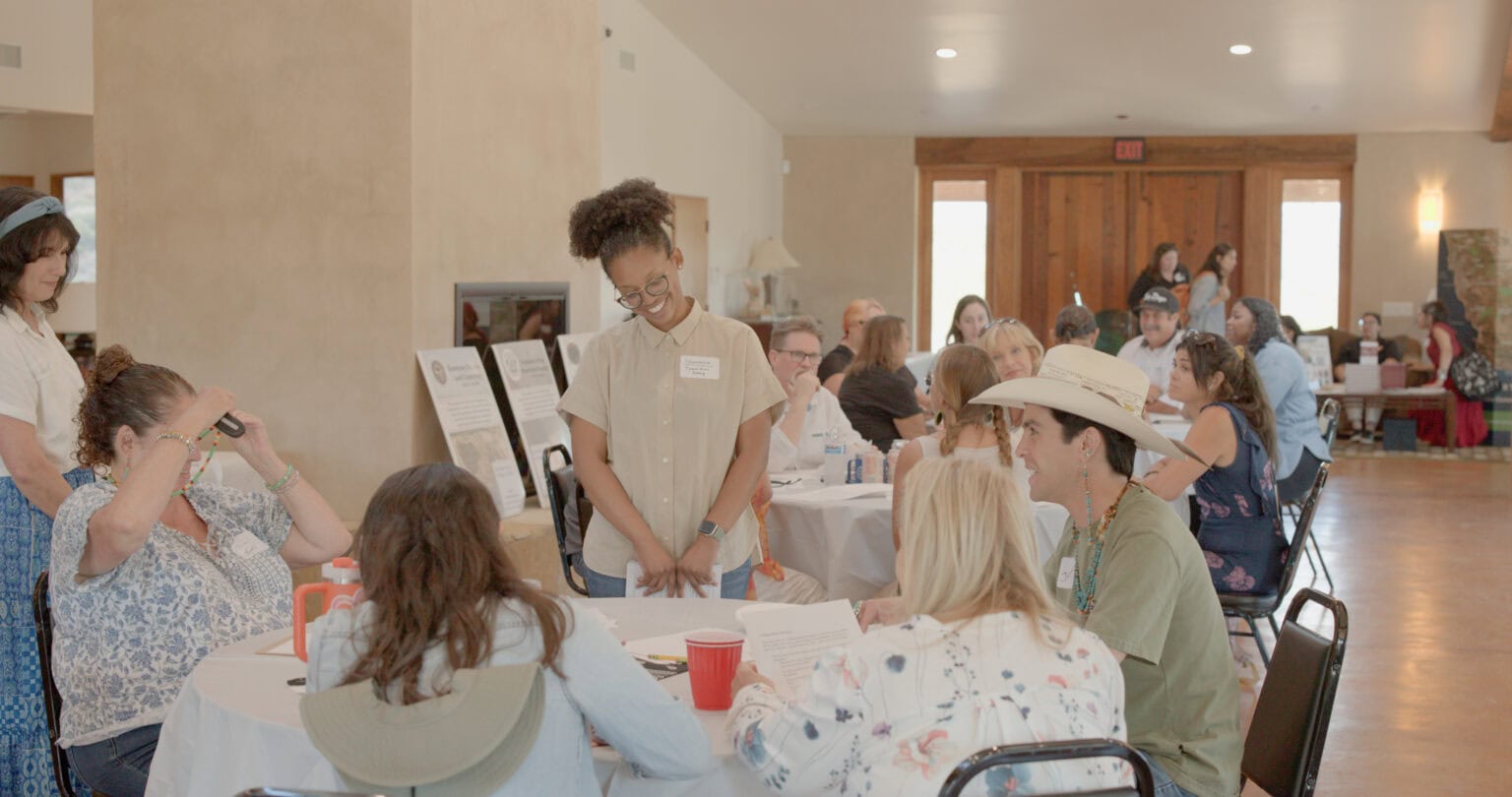
As her two years at the Reserve wind down, Margaret A. Davidson Fellow Shanasia Sylman is leaving behind more than her dissertation. A PhD candidate at Cornell University, Shanasia came to the reserve to study how public lands figure into “Land Back” and reparative justice efforts, with a focus on Kumeyaay futures in the estuary.
Hear from Shanasia about how she found the fellowship, what surprised her, and why future fellows should apply.
How did you find this fellowship and end up at the estuary?
I was at a climate research conference at Columbia presenting a paper on what happens to land after a disaster. We often say conservation is an option, and that we should preserve wetlands and build green infrastructure, but after disasters we rarely invest in making land more resilient.
I was hoping to talk to people working in California, since the state is so central to conversations about land justice. I went to a session by one of the reserve’s staff, pulled her aside afterward, and told her I’d love to hear more about her work. I had no idea the fellowship existed. She told me about it, and the rest is history.
Did anything surprise you when you arrived?
I came in fairly blind to the region, which I think was a good thing. What surprised me was the contrast. Once you learn how complicated the estuary is, with two countries, multiple agencies, funding questions, and environmental challenges, you expect to feel that urgency onsite. But when you’re standing in the estuary, all you see are birds. There might be a complicated management structure, but it’s protecting a serene space, and a lot of our work at the Reserve is about creating those peaceful moments for people and for all kinds of species.
Did your research change over the course of the fellowship?
Absolutely, which is par for the course for a social scientist. My application proposed developing cultural ecosystem service indicators, but soon after starting the fellowship I realized I was new to this place and didn’t have the relationships to start running workshops. So I took a step back and did something closer to traditional anthropological research: observing, joining work that was already underway, and figuring out where I could engage. The reserve already has so much programming, so it didn’t make sense to create another thing. To me, that’s what good researchers do—they learn from the people who’ve been doing the work for years rather than piling on top of it.
What is your research about?
I study how public lands fit into the broader movement of Land Back and and better honor Indigenous sovereignty. Part of my dissertation takes a national view of how land is transferring to Native Nations. The other half looks at specific stories of how public land managers enter this conversation. On private land, a landowner can give land back through a real estate transaction. Public lands are different. They represent something more than government ownership, so how do we acknowledge the truth of how we got these parks and then do the work to repair that harm?
The reserve is a great place to explore these questions because it isn’t one parcel, one tribe, and one agency. There are several public agencies, a diverse community on both sides of the border, and the Kumeyaay, with multiple bands that each have their own sovereign government, as well as Indigenous people in Mexico who have a different relationship with their federal government.
Consultation is legally required, and the reserve does it well, but it isn’t enough to build enduring relationships. My research looks at the activities and opportunities staff create beyond that. A community play was a key part of this, because storytelling about different futures for the estuary, ones that center the Kumeyaay, open up new ways to think about restoration and stewardship. This is slow work, and what matters is documenting the process, not a particular outcome.
How did the fellowship support you?
The Margaret A. Davidson fellowship is very well structured and resourced. Fellows receive funding for themselves and their research, whether they’re using complex sensing equipment or, like me, doing qualitative work. There’s also strong emphasis on professional development, with offerings like science communication and facilitation workshops, annual in-person meetings, and chances to meet staff from reserves across the system. The fellowship is about you excelling as an individual, whether you’re headed toward academia, government, or something else.
Why should a researcher choose the Tijuana River Estuary?
Why not? No two reserves are alike, and this one’s context is complicated in ways that make for fascinating questions. I grew up on the Texas side of the border, so being in a cross-border region again felt almost like a homecoming. It’s also the largest intact wetland in Southern California and the most southwestern point of the contiguous United States. Whether your question is biological, geological, social, or economic, this place will add richness to it.
I’d also add how supportive the staff are. They were genuinely interested in my work, created opportunities to share it in progress, and wanted to help. That matters, and I hope it brings us another awesome fellow.